
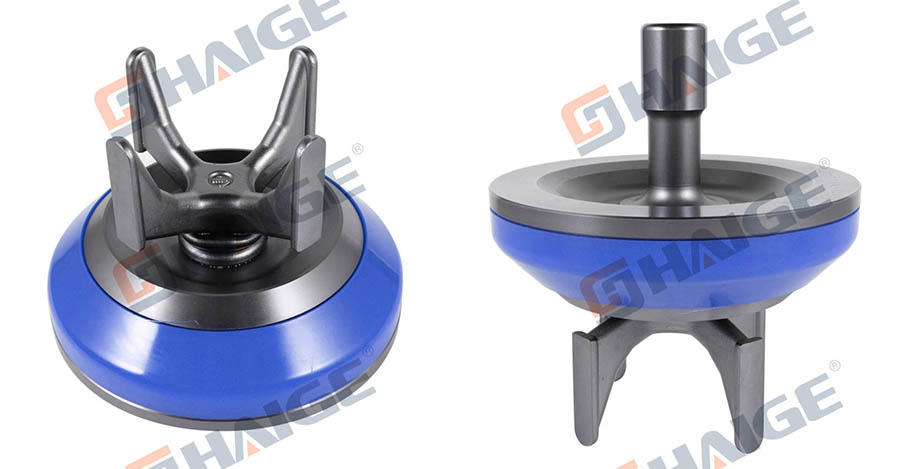
The mud pump valve is critical to preventing fluid-end failure in drilling operations. An inadequate valve can cause pressure loss, seat damage, and unplanned downtime, resulting in reduced margins and compromised safety. Today, two main valve designs are popular: Urethane-Bonded valves and valves with replaceable urethane inserts.
For sharp buyers, the decision goes past cost. It means matching material reliability, maintenance plans, and total ownership cost to operational specifications. This blog explains how each valve works, outlines the best conditions for using them, and helps buyers select the right option.
1. How Urethane- Bonded Valves Work
Urethane-bonded valves are engineered as an integrated system. The polyurethane sealing element is manufactured directly in the valve body, often by casting or bonding. It sits in precision grooves that hold it in place. Once cured, the urethane and metal act as a single unit, creating a continuous, debris-resistant seal face.
· Material approach:
- Valve body: A strong, wear-resistant alloy steel with raised sealing ribs and guides.
- Urethane: A high-hardness, high-temperature compound formulated to resist extrusion and swelling in drilling mud. (Synthesis and Evaluation of High-Temperature Resistant Polymer Plugging Agent for Water-Based Drilling Fluids, 2024, pp. 13456-13465)
Because the urethane is boned to the metal valve body, this design is less likely to cause edge lifting. It also helps prevent seat blowout and tearing caused by debris in harsh conditions.
2. How Replacement Insert Valves Work
Replacement Insert valves take a modular approach. The valve body is a durable steel frame with a recess. It holds a separate urethane or rubber sealing insert. This insert is secured by a mechanical feature such as a retainer ring, threaded plate, or snap-fit mechanism.
· Material approach:
- Valve body: Heavy-duty forged or thick-section steel that can be reused multiple times.
- Insert: A removable urethane or rubber disc that forms the actual sealing surface.
The main advantage is that operators can replace only the worn insert. This reduces costs and increases flexibility.
3. Performance in Different Mud Conditions
High-pressure, high-solids wells
In deep, high-pressure, or abrasive environments, fluid end integrity is critical. Here, bonded urethane valves are better because:
- The integrated design resists extrusionduring pressure spikes.
- There is no “gap” between the insert and the body for fine sand or cuttings to wedge into and erode the metal seat. (Preventing Valve Seat Damage: Causes, Erosion Control, 2026)
For operators using high-pressure pumps in harsh formations, bonded valves can extend fluid-change intervals.
Moderate pressure, general-purpose rigs
On onshore rigs or rigs in shallow to medium water, pressure is lower, and the mud is cleaner. Cost control and flexibility are the main priorities. In these cases, replacement-insert valves are advantageous because:
- The metal valve body is reused; only the urethane insert is replaced.
- Operators can stock a few common body types and several types of inserts (standard, high-temp, high-abrasion). This helps match changing mud conditions.
- Maintenance crews can perform quick on-the-spot fly swapsduring scheduled maintenance windows, decreasing downtime.
4. Original comparison: choosing the right valve type
The following table is for your reference. It is not generic third-party data.
| Seal integrity under pressure | Sealing surface is mechanically locked into the body; very low risk of edge lifting or seat blowing out. Best for high?pressure, high?shock environments. | Insert floats in a groove and is held by a retainer; small risk of shifting or extrusion if the retainer deforms or loosens over time. |
| Resistance to abrasive mud | Integrated urethane + metal ribs resist sand?cutting and erosion at the seal edge; good for high solids or LCM laden mud. | Still good, but edge of the insert is more exposed to localized wear if the groove geometry is not optimized or mud is very abrasive. |
| Maintenance and inventory | Entire valve is replaced; higher part cost per change but simpler stock management. | Only the insert is replaced; body can be reused. Lower part cost per event and more flexible inventory for multi grade muds. |
| Repairability at the rig | Not field-repairable; if the urethane fails, the valve is scrapped. Best for fleets with centralized repair shops. | Insert can be swapped in the field with basic tools; ideal for remote rigs or contractors with limited workshop support. |
| Long–term wear strategy | Often fewer but larger maintenance events; focus on long?life performance and minimizing seat damage. | More frequent, smaller interventions; focus on total cost per hour and consumable?part turnover. |
| Temperature sensitivity | Urethane is temperature-sensitive; very high mud temperatures can soften the bonding interface if the material grade is not selected correctly. | Same material sensitivity, but easier to swap in high temperated inserts when required, giving more operational flexibility. |
| Risk of catastrophic failure | Lower risk once the urethane is correctly bonded; failures are usually gradual wear, not sudden blowout. | Risk of sudden failure is slightly higher if the retainer loosens or the insert is installed incorrectly, exposing metal to metal contact. |
- How to Decide on Your Operation
For buyers and procurement teams, align your valve strategy by considering these explicit criteria: required operating pressure, expected solids content in mud, maintenance capability, and total cost implications. Urethane-bonded valves are a safer choice for high-pressure or high-solids mud.
Onshore, moderate pressure, or cleaner mud → replaceable Insert valves can be more cost-efficient.
1. Maintenance capability
Strong workshop support, strict quality control, and structured maintenance schedules → bonded valves fit well.
2. Total cost model
If you want long-term performance with fewer surprises, bonded valves often justify their higher unit price.
If you prefer flexible, lower-cost consumables and can handle more frequent swaps, insert-style valves can be a smarter buy.
6. Final recommendation for sharp buyers
The optimal valve choice depends on your specific operation. Review and prioritize the key decision criteria: operating conditions, maintenance capabilities, pressure, solids load, and cost constraints. For critical work, such as high-pressure wells or wells that must stay running, urethane-bonded valves help reduce failures.
#Highpressuredrilling #mudpumpparts #NOVrigparts# 7500psimudpumps# drilling technology #EMSCOFseries #PZ10Fluidend# Mudpumpvalves #urethanevalves #replaceable inserts #onshoredrillingpump #harshenviroment #Fullopenvalves #Mudpumpreplacementparts #landrigparts #pumpsmaintenance #triplexmudpumps #hightemperaturevalves #drillingmud