
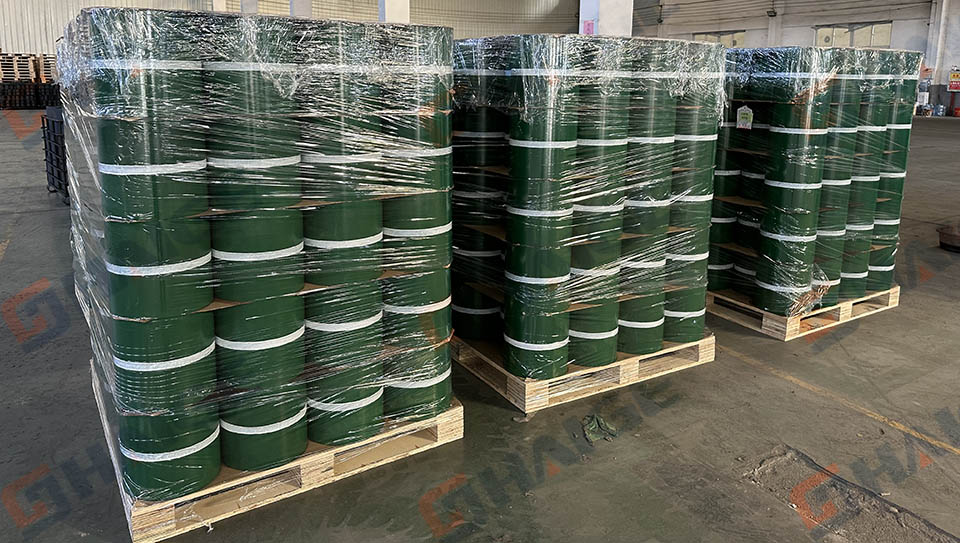
API 5CT Casing Couplings and Tubing Couplings Storage: Best Practices for Thread Protection, Corrosion Control, and Inspection
Proper storage of API 5CT Casing Couplings and Tubing Couplings is vital. It protects threads, prevents corrosion, and keeps OCTG connections ready for service.
A coupling may meet the dimensional, material, and inspection requirements of API Specification 5CT when manufactured. However, bad storage can still damage the threads. It can also cause corrosion or contamination. It can lead to galling or wear down the coating. This can happen before the coupling reaches the wellsite.
This matters for distributors, OCTG stockists, drilling contractors, oilfield service companies, and end users. They may keep Casing Couplings and Tubing Couplings in inventory for months or longer.
The current API 5CT framework covers casing, tubing, pup joints, coupling stock, coupling material, and related accessories. API 5CT also covers coupling make-up and thread protection. API Specification 5B sets requirements for API thread dimensions, tolerances, gauging, inspection, and marking.
Important: API 5B is primarily a specification for threading, gauging, and inspection. Do not interpret it as a comprehensive warehouse-storage standard. Therefore, establish storage practices based on applicable API requirements, purchaser specifications, manufacturer recommendations, environmental conditions, and the intended storage period.
What Are API 5CT Casing Couplings and Tubing Couplings?
A casing coupling connects two casing joints, while a tubing coupling connects two tubing joints.
API 5CT applies to several API connections used for casing and tubing, including:
- Short Round Thread Casing — SC
- Long Round Thread Casing — LC
- Buttress Thread Casing — BC
- Non-Upset Tubing — NU
- External Upset Tubing — EU
- Integral Tubing — IJ
These connections are used in conjunction with the requirements of API 5B for applicable thread geometry, gauging, and inspection.
Because the threaded connection is critical to mechanical integrity and, depending on the application, pressure containment, the coupling threads must remain in good condition from manufacturing through transportation, storage, inspection, and installation.
Why Is Proper Coupling Storage Important?
Manufacturing defects do not necessarily cause the most common storage problems. They can develop after the product has passed final inspection.
Typical problems include:
- Thread corrosion
Moisture, condensation, salt air, rainwater, and contaminated storage environments can corrode exposed coupling threads.
Even relatively light corrosion can affect thread surfaces and make subsequent inspection, gauging, or make-up more difficult.
- Thread damage
Couplings can be damaged when they are:
- Dropped during handling
- Dragged across steel surfaces
- Stacked improperly
- Stored without adequate protection
- Exposed to impact from forklifts or lifting equipment
- Transported without suitable thread protection
API 5CT states that thread protectors protect threads and pipe ends during handling and shipping.
They also help keep dust and water out during transport and normal storage.
- Contamination
Dirt, dust, sand, metal particles, cutting fluids, water, and other contaminants can enter the threaded connection.
Contamination is especially unwanted when the coupling will be inspected later. It may also be measured. It may be coated with thread compound. It may be assembled with casing or tubing.
- Loss or deterioration of thread compound
Exposed threads require appropriate protection. API 5CT 11th Edition requires thread compound on exposed threads. However, you may use a different-color storage compound on exposed threads. Apply the compound to surfaces that are clean and reasonably free of moisture and cutting fluids.
- Confusion between different thread types
A warehouse may contain several coupling sizes, grades, weights, and connection types.
Mixing:
- 5-1/2 in. casing couplings
- 4-1/2 in. casing couplings
- tubing couplings
- LC and BC connections
- different steel grades
- different special-clearance designs
can create serious identification and traceability problems.
What Does API 5CT Say About Thread Protection?
API 5CT contains specific requirements concerning coupling make-up and thread protection.
For applicable casing and tubing products, API 5CT requires thread protection measures. These include thread protectors for threaded and coupled pipe. It also applies to threaded pipe supplied without couplings.
The standard also specifies that thread protectors should:
- Cover the required thread length
- Protect threads from mechanical damage
- Help prevent infiltration of dust and water
- Be suitable for normal transportation and storage
- Avoid damaging the product threads
API 5CT considers the normal storage period for thread protector performance to be about one year. Other arrangements or requirements may apply.
This point matters for inventory managers: thread protection is not permanent corrosion protection, regardless of storage time.
For long-term inventory, periodically review the condition of the coupling, thread compound, protectors, packaging, and storage environment.
Should API 5CT Couplings Be Stored With Thread Protectors?
Yes, maintain thread protection during normal storage.
Thread protectors provide two primary functions: Mechanical protection and Environmental protection.
They help prevent impact damage to the thread and reduce the possibility of water, dust, and other contaminants entering the threaded area.
API 5CT specifies requirements for thread protector coverage and performance. External protectors should cover the full length of the external thread, while internal protectors should provide equivalent coverage of the internal thread.
For coupling inventory, the practical rule is simple:
If necessary, do not leave API casing or tubing coupling threads exposed during storage.
If you remove a protector for inspection, cleaning, or other reasons, re-protect the coupling as soon as practical.
How Should API 5CT Casing Couplings Be Stored?
A good coupling-storage system should control five factors:
Environment + Moisture + Thread Protection + Identification + Inspection
1. Store Couplings in a Dry Environment
Whenever practical, store casing and tubing couplings in a clean, dry, covered area.
Indoor storage is preferable for long-term inventory because it lowers exposure to rain, snow,
salt spray, condensation, humidity, airborne contaminants, and temperature cycling
Outdoor storage may be necessary for large OCTG inventories, but consider additional protection.
2. Keep Couplings Off the Ground
Do not place couplings directly on soil or concrete where water can accumulate. Avoid other surfaces that expose the product to standing water.
Use suitable racks, timber supports, steel supports, pallets, or dunnage.
The objective is to allow drainage and reduce direct contact with moisture and contaminants.
3. Avoid Water Gathering Inside Threaded Areas
Water trapped inside a coupling or around its threaded surfaces can greatly increase the risk of corrosion.
Storage personnel should pay particular attention after rain, washing, transportation, condensation, and temperature changes.
If moisture is present, evaluate, clean, and re-protect the coupling as appropriate before returning it to long-term storage.
How Should Couplings Be Protected From Corrosion?
Corrosion protection generally includes a combination of:
clean threads + suitable compound + thread protectors + controlled storage environment.
API 5CT states that exposed threads should be coated with thread compound, and permits a distinct-color storage compound d as an alternative for exposed threads.
For long-term storage, the selected compound should be compatible with:
- The coupling material
- The connection type
- The intended service
- Subsequent cleaning requirements
- The purchaser’s specification
- The manufacturer’s recommendations
Do not assume that every general-purpose anti-corrosion product is suitable for an API threaded connection.
For specific thread-compound requirements, API identifies RP 5A3 / ISO 13678 as the relevant recommended practice for thread compounds used with casing, tubing, line pipe, and drill-stem elements.
Can Casing Couplings and Tubing Couplings Be Stored Outdoors?
Yes, but outdoor storage requires greater control of environmental exposure.
Outdoor storage risks include rain, snow, condensation, UV exposure, salt-laden air, mud and soil contamination, and rapid temperature changes.
If outdoor storage is unavoidable, consider:
Covered storage
Use a roof or suitable weather protection to reduce direct exposure to precipitation.
Elevated storage
Keep couplings above ground level using appropriate supports.
Drainage
Ensure that water cannot accumulate around the products.
Thread protection
Keep suitable protectors installed and inspect them periodically.
Corrosion monitoring
Inspect exposed surfaces and threaded areas for early signs of oxidation or corrosion.
How Long Can API 5CT Couplings Be Stored?
There is an important distinction between thread-protector performance and an unlimited product shelf life.
API 5CT 11th Edition states that the normal storage period for thread-protector performance is approximately one year.
This does not mean that a coupling automatically becomes unusable after one year.
Instead, it means that storage beyond the normal period requires appropriate evaluation and maintenance.
For long-term inventory, establish a periodic inspection program covering:
- Thread condition
- Corrosion
- Thread compound condition
- Thread protector condition
- Identification markings
- Coupling dimensions where required
- Surface condition
- Packaging condition
- Traceability documentation
If the product has been exposed to severe environmental conditions, adjust inspection intervals accordingly.
What Should Be Checked Before Reusing a Stored Coupling?
Before shipping an API 5CT casing coupling or tubing coupling to a customer or installing it in the field, perform an appropriate inspection.
Visual Inspection
Check for:
- Rust
- Pitting
- Dents
- Impact damage
- Damaged threads
- Contamination
- Missing markings
- Damaged thread protectors
- Coating deterioration
Thread Inspection
Where required, inspect the thread profile and condition using appropriate gauges and inspection procedures.
API 5B covers sizes, tolerances, marking rules, and gauges for API casing, tubing, and line-pipe threads.
It also addresses thread inspection at manufacturing, intermediate locations, destination, and inspection points.
This makes API 5B particularly relevant when stored couplings are being re-inspected before use.
Does API 5B Specify Coupling Storage Requirements?
This is one of the most frequently misunderstood points.
API 5B is not primarily a coupling-storage standard.
API 5B focuses on:
- Thread dimensions
- Thread tolerances
- Thread forms
- Gauging
- Inspection
- Marking requirements
for applicable casing, tubing, and line-pipe threads.
Therefore:
API 5CT → product, delivery, coupling, and thread-protection requirements
API 5B → thread dimensions, gauging, and inspection requirements
API RP 5A3 / ISO 13678 → thread-compound guidance
For a complete storage procedure, combine these requirements with the purchaser’s specifications, manufacturer recommendations, environmental conditions, and internal warehouse procedures.
Common API 5CT Coupling Storage Problems and Solutions.
| Storage Problem | Possible Consequence | Recommended Control |
| Couplings stored directly on ground | Moisture and contamination | Use racks, pallets or dunnage |
| Missing thread protectors | Thread damage and contamination | Install suitable protectors |
| Exposed threads without compound | Corrosion | Apply suitable thread/storage compound |
| Water trapped around threads | Corrosion/pitting | Improve drainage and inspect regularly |
| Mixed coupling sizes | Identification errors | Segregate by size and connection |
| Mixed thread types | Incorrect installation | Clearly identify thread type |
| Damaged protectors | Reduced protection | Replace damaged protectors |
| Long-term outdoor storage | Accelerated corrosion | Use weather protection and inspections |
| Dirty threads | Gauging/make-up problems | Clean and inspect before use |
| Poor traceability | Certification/product identification problems | Maintain heat, grade, size, and connection records |
How Should Couplings Be Organized in a Warehouse?
A professional OCTG warehouse should organize coupling inventory according to traceability and connection compatibility.
At minimum, consider segregation by:
Product type
- Casing coupling
- Tubing coupling
- Special-clearance coupling
- Other accessories
Size
For example:
- 4-1/2 in.
- 5 in.
- 5-1/2 in.
- 7 in.
- 9-5/8 in.
Connection
For example:
- BTC
- LTC
- STC
- NU
- EU
Grade
For example:
- J55
- K55
- N80
- L80
- P110
- Other specified grades
Traceability
Maintain the following:
- Manufacturer information
- Heat number
- Product identification
- Grade
- Size
- Weight
- Connection type
- Inspection records
- Mill test report/certification documentation
API 5CT includes certification requirements for delivered products, confirming the importance of maintaining product documentation and traceability.
What About Long-Term Storage of Premium or Corrosion-Resistant Connections?
Premium connections and corrosion-resistant alloys may require additional controls.
Do not automatically copy the storage procedure from standard carbon-steel casing couplings.
Particular attention may be required for:
- CRA materials
- Martensitic chromium steels
- 13Cr products
- Premium connections
- Special thread profiles
- High-value proprietary connections
For example, API 5CT specifically states that bare steel thread protectors shall not be used on Grade L80 Types 9Cr and 13Cr tubulars.
This shows why you must consider both the coupling material and the connection type when establishing storage procedures.
API 5CT Coupling Storage Checklist
Before accepting coupling inventory into a warehouse, verify:
Receiving Inspection
☐ Correct coupling size
☐ Correct connection type
☐ Correct grade
☐ Correct marking
☐ Thread protectors installed
☐ No visible thread damage
☐ No significant corrosion
☐ No excessive contamination
☐ Packaging intact
☐ Certification and traceability available
Storage Inspection
☐ Couplings stored off the ground
☐ Storage area dry and clean
☐ Water collection prevented
☐ Thread protectors maintained
☐ Exposed threads adequately protected
☐ Products segregated by size and connection
☐ Product identification stays visible
☐ Periodic inspection scheduled
Pre-Delivery / Pre-Installation Inspection
☐ Remove and inspect thread protector
☐ Inspect thread condition
☐ Clean threads where necessary
☐ Examine for corrosion or pitting
☐ Verify connection identification
☐ Perform required gauging/inspection
☐ Apply appropriate thread compound
☐ Reinstall suitable thread protection if required for transportation
Frequently Asked Questions About API 5CT Coupling Storage
1. Do API 5CT casing couplings need thread protectors during storage?
Yes. API 5CT specifies thread-protection rules to protect threads from mechanical damage and to reduce dust and water ingress. This applies during transportation and normal storage.
2. How long can API 5CT couplings be stored?
API 5CT specifies approximately 1 year as the normal storage period for thread-protector performance. Longer storage requires inspection and maintenance; it does not assume the product will remain protected indefinitely.
3. Can API casing couplings be stored outside?
Outdoor storage is possible, but environmental exposure increases the risk of corrosion and contamination. Covered, elevated storage with effective thread protection is preferable for long-term inventory.
4. Should coupling threads be coated with thread compound during storage?
API 5CT requires exposed threads to be coated with thread compound, and permits a distinct-color storage compound as an alternative on exposed threads. The surface should be clean and reasonably free from moisture and cutting fluids before application.
5. What is the difference between API 5CT and API 5B?
API 5CT specifies technical delivery requirements for casing, tubing, pup joints, coupling stock/material, and related products. API 5B focuses on API thread dimensions, tolerances, gauging, inspection, and marking.
6. What should I do if stored coupling threads show rust?
Do not automatically put the coupling into service. Clean and evaluate the affected area, determine whether corrosion has damaged the thread profile or sealing surfaces, and perform the applicable inspection or gauging before reuse.
7. Can damaged thread protectors be reused?
Do not rely on a damaged protector to provide the intended mechanical and environmental protection. Replace it with a suitable protector appropriate for the coupling.
8. Does storage affect API compliance?
Storage does not change a coupling’s manufacturing specification. However, poor storage can damage the product or cause it to deteriorate. Before use, assess the coupling against applicable product, thread, inspection, and purchaser requirements.
Best Practices for API 5CT Casing and Tubing Coupling Storage
The most effective storage strategy can be summarized in eight steps:
- Keep couplings clean.
Prevent dirt, sand, water, and other contaminants from entering the threaded area. - Keep couplings dry.
Minimize rain, condensation, and standing water. - Protect the threads.
Use suitable thread protectors throughout transportation and storage. - Protect exposed threads against corrosion.
Use an appropriate thread or storage compound in accordance with the applicable requirements. - Avoid mechanical damage.
Use proper lifting, handling, and stacking procedures. - Maintain identification and traceability.
Segregate couplings by size, grade, connection, and other relevant product information. - Inspect long-term inventory.
Do not assume that a coupling remains in the same condition simply because it has not been used. - Inspect before installation.
Verify thread condition, cleanliness, identification, and applicable dimensional/gauging requirements before make-up.
Conclusion
Proper storage helps keep API 5CT Casing Couplings and Tubing Couplings in good working condition. It protects them between manufacturing and field installation.
API 5CT provides specific requirements for coupling make-up, exposed-thread protection, and thread protectors, while API 5B provides the framework for applicable API thread dimensions, gauging, and inspection.
The key principle is clear:
An API-compliant coupling should be protected, identified, inspected, and maintained during storage. It should not only be inspected when it leaves the factory.
For distributors and oilfield buyers, a written storage and inspection procedure can reduce corrosion losses. It can prevent thread damage, improve inventory traceability, and lower the risk of unusable couplings at the wellsite.
Note on standards: The API standards list shows API 5CT, 11th Edition, published in December 2023. Addendum 1 was published in May 2025. Errata 3 is listed in June 2026.
API currently lists API 5 B as the 16th Edition, including its published addenda/errata. (Errata – RP 13c, 2018) Always check the applicable edition, addenda, errata, purchaser specification, and manufacturer requirements for a specific project.
Need API 5CT Casing Couplings or Tubing Couplings?
If you need API 5CT Tubing Couplings, Casing Couplings, or Special Clearance Couplings, contact Haige.
We carry a full range of API 5CT grades and connections. This includes BTC, LTC, STC, EUE, and NUE couplings. We also provide Special Bevel Couplings, D-10 Couplings, and line pipe couplings.
Contact us for full technical specs, material grades, thread types, inspection needs, and traceability support.
#API5CT #API5B #CasingCouplings #TubingCouplings #OCTG #OilfieldEquipment #Casing #Tubing #OilAndGas #ThreadProtection #OCTGStorage #OilfieldProcurement #China #Couplingstorage #OCTGconnection #Oilfield
References
“API Specification 5CT, 11th Edition.” API Specification 5CT, 2023. https://www.api.org/products-and-services/standards/important-standards-announcements/spec5ct. Accessed September 21, 2026
“API SPECIFICATION 5CT: Casing and Tubing – Eleventh Edition (2023).” API SPEC 5CT, 11th Edition, Section 11.2.1, 2023. https://studylib.net/doc/27888860/api-spec-5ct-2023. Accessed September 21, 2026
“Errata – RP 13c.” API Specification 5B, Threading, Gauging, and Inspection of Casing, Tubing, and Line Pipe Threads, 16th Edition, December 2017 Errata 2, December 1, 2018. https://www.api.org/~/media/files/certification/monogram-apiqr/0_api-monogram-apiqr/advisories-updates/addenda-errata/api_5b_16th%20edition_errata-2_01_december-2018.pdf