
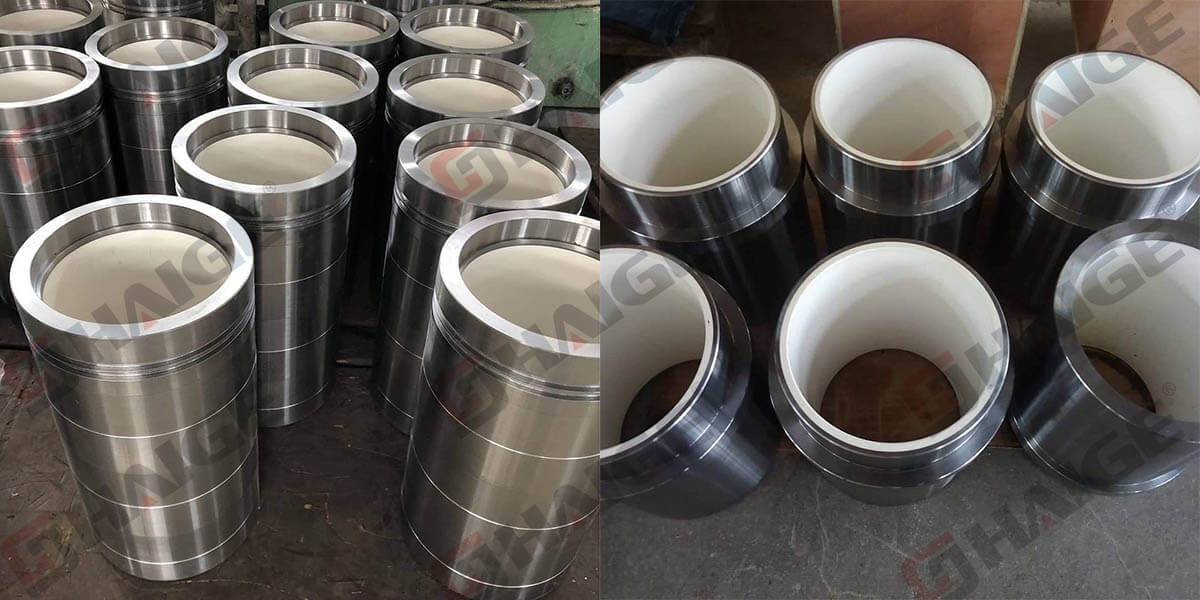
Choosing the Right Ceramic Liner for High-Performance Drilling Operations
In modern oil and gas drilling, mud pump performance affects drilling efficiency, downtime, and overall project profitability. Among all wear components inside a reciprocating mud pump, the fluid end liner is one of the most critical. It directly contacts abrasive drilling fluids under extreme pressure conditions.
Selecting the right ceramic liner material is a strategic decision, especially for USA and Canada drilling contractors and oilfield equipment buyers. Two of the most widely used advanced ceramic liner materials are Zirconia Ceramic Liners and Alumina Ceramic Liners.
Both materials offer excellent wear resistance compared with traditional chrome-plated steel liners, but their mechanical characteristics, operating performance, and cost advantages differ significantly.
Knowing these differences helps drilling companies choose the best liner for each job. This includes shale drilling, deep wells, horizontal wells, and HPHT operations.
Today we provide a complete technical comparison between zirconia and alumina ceramic liners to help drilling professionals make proper decisions.
What Are Ceramic Liners Used for in Oilfield Mud Pumps?
A mud pump liner is a cylindrical wear component installed inside the fluid end of a drilling pump. Its main role is to provide a durable surface where the piston moves back and forth while pumping drilling mud.
During drilling operations, liners are exposed to:
- High-pressure drilling fluids
- Abrasive solids such as sand and cuttings
- Chemical additives
- Continuous piston friction
- Extreme pressure cycles
A traditional metal liner may experience rapid wear under harsh drilling conditions. Ceramic liners were created to overcome these drawbacks by providing:
- Higher hardness
- Superior corrosion resistance
- Lower friction
- Longer service life
- Reduced maintenance frequency
For drilling contractors operating expensive rigs, extending liner life can reduce non-productive time (NPT) and replacement costs.
Overview of Zirconia Ceramic Liners
Material Structure and Characteristics
Zirconia ceramic liners are manufactured primarily from zirconium dioxide (ZrO₂). Through advanced stabilization technology, zirconia can achieve exceptional mechanical strength and toughness.
Common stabilized zirconia materials include:
- Yttria-stabilized zirconia (YSZ)
- Magnesia-stabilized zirconia (MSZ)
- Partially stabilized zirconia (PSZ)
Among these, YSZ is widely used in demanding industrial applications for its excellent equilibrium between strength and wear resistance.
Chief Advantages of Zirconia Ceramic Liners
1. Exceptional Fracture Toughness
The biggest advantage of zirconia is its high fracture toughness.
Compared with alumina, zirconia can better resist:
- Impact loading
- Mechanical shock
- Sudden pressure changes
This makes zirconia liners suitable for challenging drilling environments in which vibration and pressure fluctuations are common.
2. Superior Wear Resistance
Zirconia provides excellent abrasion resistance when handling drilling fluids containing quartz particles, formation cuttings, and/or heavy-weight additives.
Longer wear life means fewer liner replacements and improved drilling continuity.
3. Better Performance Under High Mechanical Stress
Zirconia’s higher toughness allows it to maintain structural robustness under high pressure and at greater drilling depths.
4. Reduced Risk of Cracking
Ceramic materials are naturally brittle, but zirconia’s transformation toughening mechanism improves crack resistance.
When microscopic cracks begin forming, zirconia experiences a phase transformation that helps absorb energy and slow crack propagation.
Overview of Alumina Ceramic Liners
Material Structure and Characteristics
Alumina ceramic liners are produced primarily from aluminum oxide (Al₂O₃).
Alumina is a well-known engineering ceramic. It has been used in industrial wear applications for decades.
Alumina mud pump liners usually include 92%, 95%, or 99% alumina. A higher alumina content generally offers increased hardness and chemical resistance.
Major Benefits of Alumina Ceramic Liners
1. Extremely High Hardness
Alumina has excellent hardness, making it highly resistant to abrasive wear.
Its hardness helps protect the liner surface from:
- Sand erosion
- Solid particle impact
- Continuous piston movement
2. Excellent Chemical Stability
Alumina ceramic is highly resistant to chemical corrosion from:
- Water-based mud (WBM)
- Oil-based mud (OBM)
- Synthetic-based mud (SBM)
- Various drilling additives
This makes alumina liners reliable in chemically aggressive drilling environments.
3. Cost-Effective Performance
Compared with zirconia, alumina ceramic liners generally have lower manufacturing costs.
For many standard drilling applications, alumina provides an excellent balance between service life, performance, and initial investment.
4. Proven Industry Reliability
Alumina liners have been used globally in oilfield applications for many years. Their predictable performance makes them a preferred option among drilling contractors and mud pump manufacturers.
Zirconia vs Alumina Ceramic Liners: Technical Comparison
| Main Material | Zirconium Oxide (ZrO₂) | Aluminum Oxide (Al₂O₃) |
| Hardness | Very High | Extremely High |
| Fracture Toughness | Excellent | Moderate |
| Impact Resistance | Superior | Lower |
| Abrasion Resistance | Excellent | Excellent |
| Corrosion Resistance | Excellent | Excellent |
| Thermal Shock Resistance | Better | Moderate |
| Weight | Slightly Higher | Lower |
| Cost | Higher | More Economical |
| Service Application | Extreme drilling conditions | Standard to demanding drilling |
Performance Differences in Real Drilling Applications
Shale Drilling Operations
North American shale drilling operations regularly involve:
- Long horizontal sections
- High pump pressures
- Continuous circulation
- Abrasive formation materials
Under these conditions, zirconia liners may provide advantages because of their greater toughness and ability to withstand mechanical stress.
However, high-quality alumina liners can also deliver excellent performance when drilling parameters are properly controlled.
Deep Well and HPHT Drilling
Deep wells create extreme operating conditions:
- Higher mud pressures
- Increased temperature
- Greater mechanical loads
Zirconia ceramic liners are commonly selected for these applications because of their greater resistance to cracking and impact damage.
General Land Drilling Applications
For conventional drilling projects with moderate pressure and normal operating conditions, alumina ceramic liners remain a highly reasonable option.
They provide:
- Reliable wear performance
- Lower purchase cost
- Long operational history
Service Life Comparison: Which Ceramic Liner Lasts Longer?
Actual liner life depends on multiple factors. These include mud composition, solid content, pump pressure, stroke rate, operating procedures, and maintenance practices
In general:
Zirconia liners typically provide longer service durability under harsh conditions because of their toughness and crack resistance.
Alumina liners often provide excellent longevity in standard drilling environments with lower operating stress.
The best choice is not always the lowest-priced liner. Drilling contractors and sharp buyers evaluate more than just cost, including replacement frequency, downtime impact, and total operating cost.
Cost Factors for Oilfield Buyers
Alumina Ceramic Liner Cost Advantages
Alumina is attractive because of lower upfront cost, wide availability, reliable performance, and easier budget planning.
It is often selected for fleet operations where cost control is a priority.
Zirconia Ceramic Liner Cost Advantages
Zirconia costs more upfront, but total costs can change when you include service life and hidden mechanical costs. It reduces long-term operating expenses through:
- Longer replacement intervals
- Less downtime
- Reduced maintenance labor
- Improved pump reliability
So, when purchasing ceramic liners, evaluate total cost rather than initial price alone. Higher investment may deliver better ROI.
| Cost Factor | Alumina Ceramic | Zirconia Ceramic |
| Relative unit price | Lower | Higher |
| Documented service life | Moderate, load-dependent | 4,000–10,000+ hours |
| Rod conversion requirement | Often required, ~$1,000+/cylinder | Typically not required |
| Changeouts per 4,000 operating hours (approx.) | Variable, typically higher | 0–1 |
| Net cost-per-hour in continuous-duty service | Moderate | Lowest |
How to Select the Right Ceramic Liner for Your Mud Pump
Before choosing between zirconia and alumina, drilling companies should evaluate:
Drilling Environment
Formation hardness, abrasive content, well depth, pressure requirements
Pump Operating Conditions
Pump model, maximum pressure rating, stroke speed, daily operating hours
Drilling Fluid Characteristics
Mud density, solid concentration, chemical additives, temperature conditions
Total Cost of Ownership
Combine purchase price, expected service life, rod conversion requirements, replacement labor, and rig downtime cost into a single cost-per-hour figure before comparing suppliers — the liner with the lowest sticker price is very rarely the liner with the lowest total cost.
Zirconia or Alumina: Which Ceramic Liner Is Better?
There is no universal winner because the two materials are optimized for different loading conditions, and the data above supports a specific, evidence-based decision rule rather than a blanket recommendation.
Choose zirconia ceramic liners when:
- Operating pressure is extremely high.
- Mechanical shock is frequent.
- Extended liner life is a priority.
- Downtime costs are high
Choose alumina ceramic liners when:
- Cost efficiency is important.
- Drilling conditions are moderate.
- Proven reliability is required.
- Replacement budgets need optimization.
For many professional drilling contractors, the best choice is to pick a ceramic liner based on real operating conditions. Do not choose it based only on price.
Conclusion: Making the Right Ceramic Liner Investment
Ceramic liner technology has greatly improved mud pump dependability in oil and gas drilling. Both zirconia and alumina ceramic liners provide major advantages versus traditional metal liners, including improved wear resistance, corrosion protection, and longer service intervals.
Zirconia offers superior toughness and performance in extreme drilling environments, while alumina provides excellent durability and cost efficiency for a wide range of applications.
For oilfield companies in the United States and Canada, selecting the correct ceramic liner can directly influence drilling efficiency, equipment reliability, and operational profitability. Working with an experienced ceramic liner manufacturer is important. The manufacturer should understand mud pump applications. This helps you get the best performance and return on investment (ROI).
Looking for high-performance zirconia or alumina ceramic liners for your oilfield mud pumps?
Haige Machinery is a China-based oilfield equipment supplier. We specialize in OEM interchangeable mud pump parts. We supply zirconia ceramic liners, fluid-end modules, valves, pistons, and drilling equipment components. Our parts fit NOV, EMSCO, Gardner Denver, Oilwell, BOMCO, Honghua, Wirth, Ideco, LEWCO, and other major mud pump systems.
Our engineering team provides customized ceramic liner solutions for drilling contractors, OEM mud pump manufacturers, and oilfield service companies across North America.
Contact Haige Machinery today to discuss your pump model, drilling conditions, and performance requirements. We can help you select the right ceramic liner technology to maximize pump reliability and reduce operating costs.
Request a technical consultation and get your ceramic liner recommendation today.
#OilfieldEquipment #MudPump #DrillingContractor #OilAndGasIndustry #China #MudPumpmanufacturer #pumpparts #stock #USAdrilling #NOV
#CeramicLiner #ZirconiaCeramic #AluminaCeramic #DrillingTechnology
#OilfieldServices #WellDrilling #PetroleumEngineering #EnergyIndustry
#NorthAmericanDrilling #PumpParts #IndustrialCeramics